
Private Collection (not for sale)
In this sequence the Artist in her research, attempted to explore the plight of refugees and trace migratory patterns, by starting right at her own doorstep. She traced the family ancestral bloodline and Colonial history from the Middle Ages in Europe, up to current times. In this instance, the ancestral line migrated across borders and oceans to the continent of Africa.
Researching the socio-economical circumstances of Europe and Africa, the Artist discovered that the Dutch East India Company from the Netherlands, was trading the Spice Route at the time. Tracing the path, it showed that the Company had to sail past the Cape of Storms. For the survival of the sea crew on board the ships, the United East India Company, also known as the V.O.C., founded a Refreshment Station, which later became known as one of the founding moments of the History of South Africa (Ray:2025).1
Serving as an employee of the Company, the first forefather of the Artist’s family was brought to the shoreline of South Africa (Krige:1973).2 The VOC as a company traded various goods, such as spices and textiles like silk and cotton, as well as Chinese porcelain. Considering the artefacts and the goods that were traded, the Artist made the symbolic choice of choosing porcelain as a medium for her next sequence.
(1) Ray, M
(2) Krige, JD.
Dutch East India Company,. Encyclopedia Britannica, https://www.britannica.com/place/Netherlands, 2025.
Die Familie Krige – Herkoms en Genealogie, Craft Pers (Edms) Bpk Babelegi, 1973.

Family Tree (27 cm. diam. approx.)
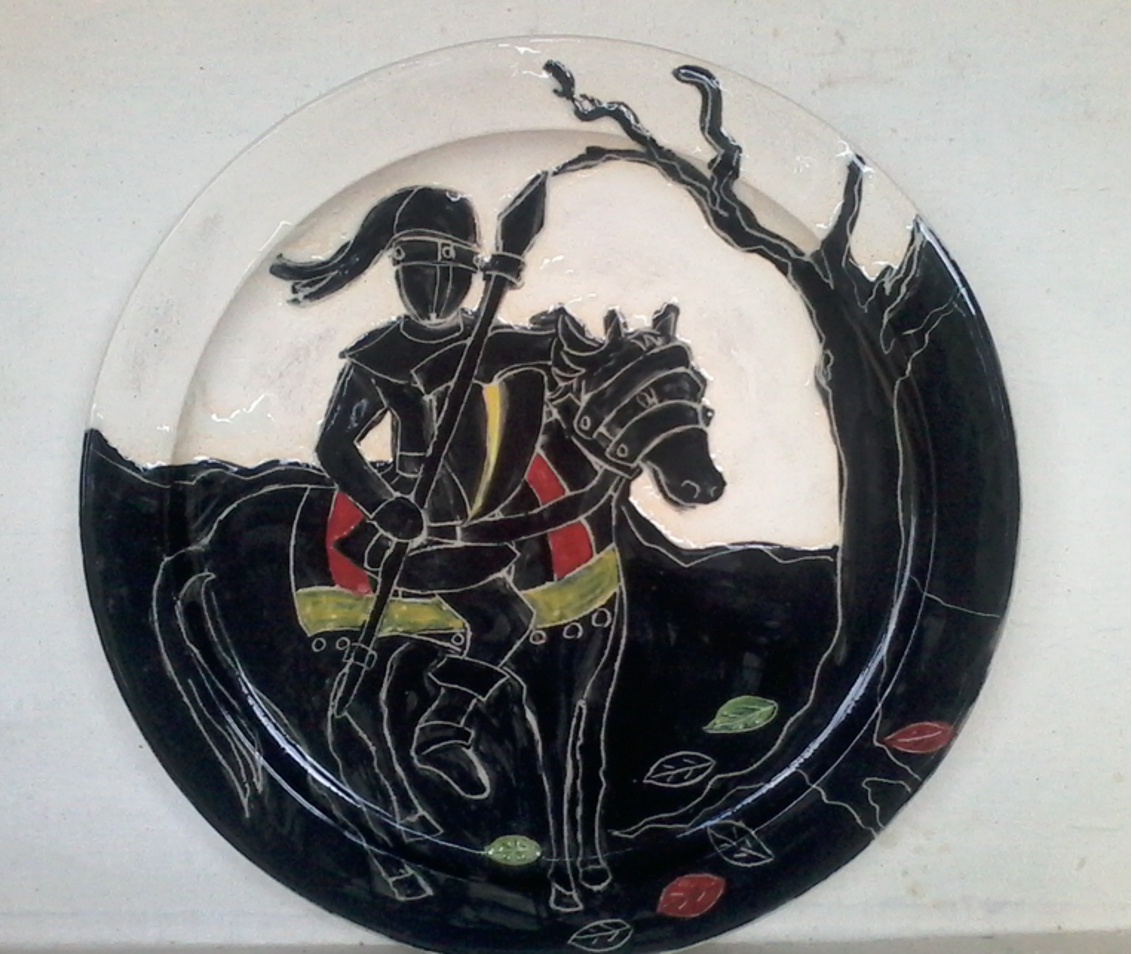
General on the frontier of Charlemagne (27 cm. diam. approx.)
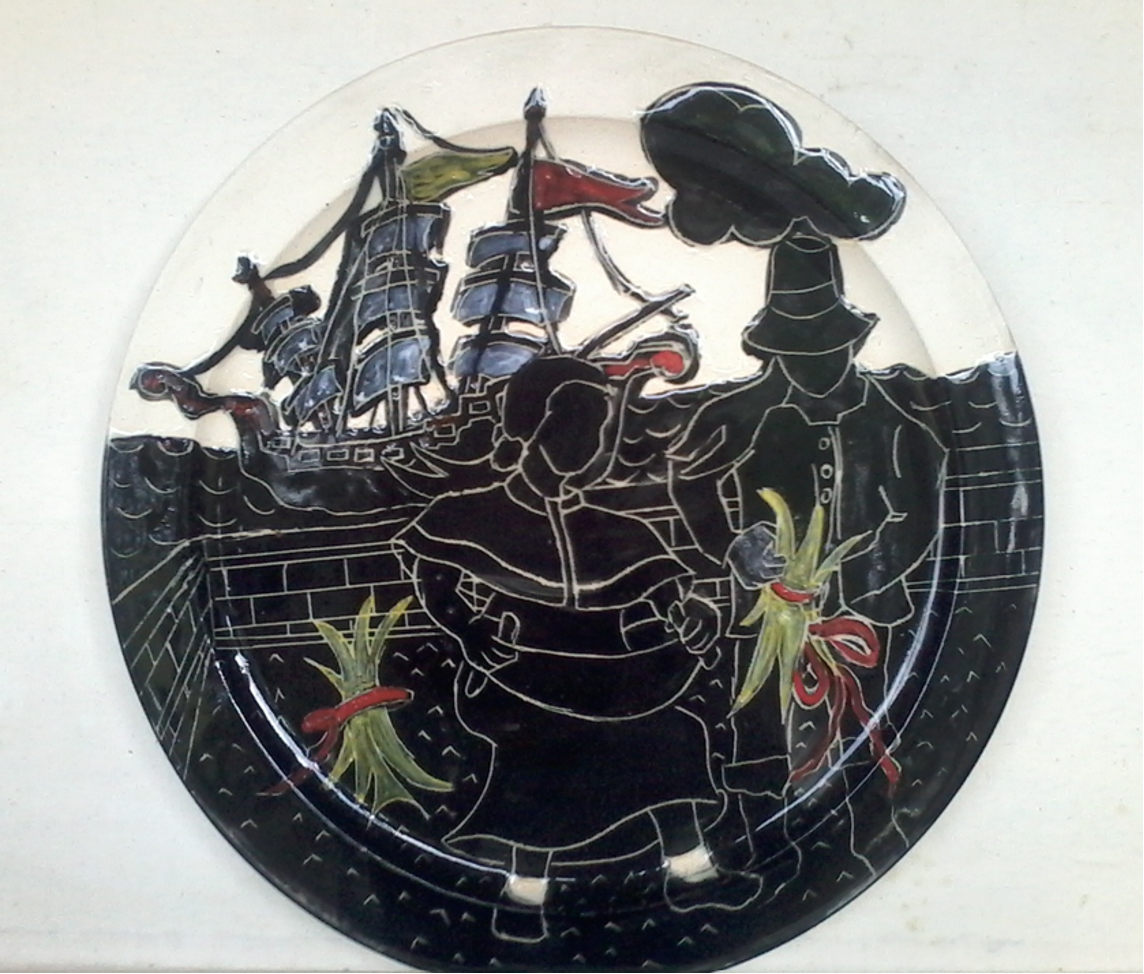
Compensation (27 cm. diam. approx.)

Persecution (27 cm. diam. approx.)

The Passage – Het Vaderland Getrouw (48 cm. diam. approx.)
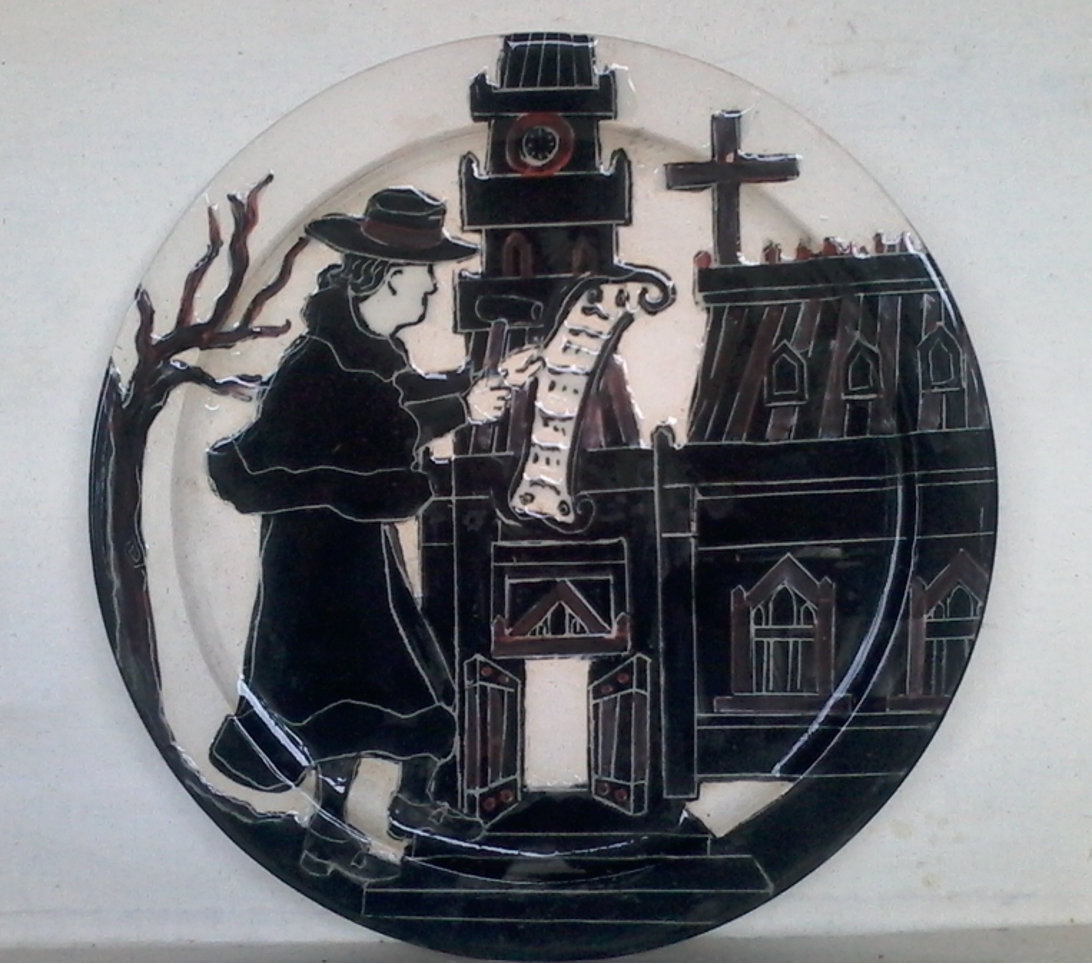
Reformation (27 cm. diam. approx.)
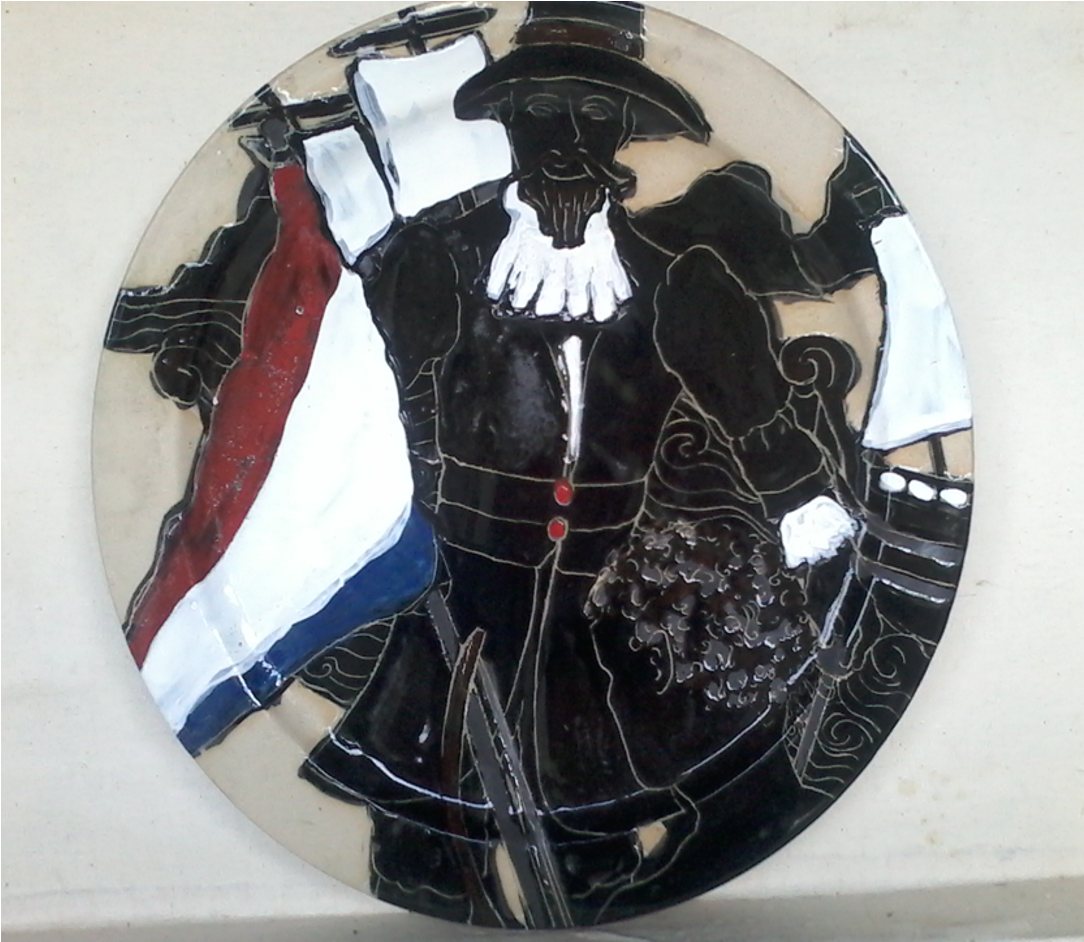
Refreshment Station- Cape of Good Hope (27 cm. diam. approx.)

The Reverend of Prince Albert (27 cm. diam. approx.)

Industrialisation and Urbanisation (27 cm. diam. approx.)