
In a previous self-assigned project, the Artist explores migratory patterns by tracing family lineage, as to get an understanding of historical, religious and geopolitical triggers, that off-set patterns for migration. Following up on the prompts, a complex landscape of movement, settlements, new borders and trails of migration unfold. These factors had an influence on communities, food production, land allocation and borders. Additional external factors such as, droughts, pestilence and socio-political factors, also played a major role. In Europe, agricultural communities collapsed, that forced people beyond their national borders in a quest for finding new means of survival 1 (Ljungqvis, Seim & Collet:2023).
In the installation sequence of a series of mini theatres, paper sculptures, paper dolls and ceramic sculpture, as well as found objects, the Artist selects critical historical moments. Recent national history is explored to get a clearer understanding of the impact of such influences on communities.
Mini theatres and doll’s houses symbolize an innocent world, uncontaminated by worldly influences as in childhood play. The Artist uses the association of a fantasy world and replaces play-like elements with harsh factual objects, historical facts and disruption, depicting some of the critical moments in national history.
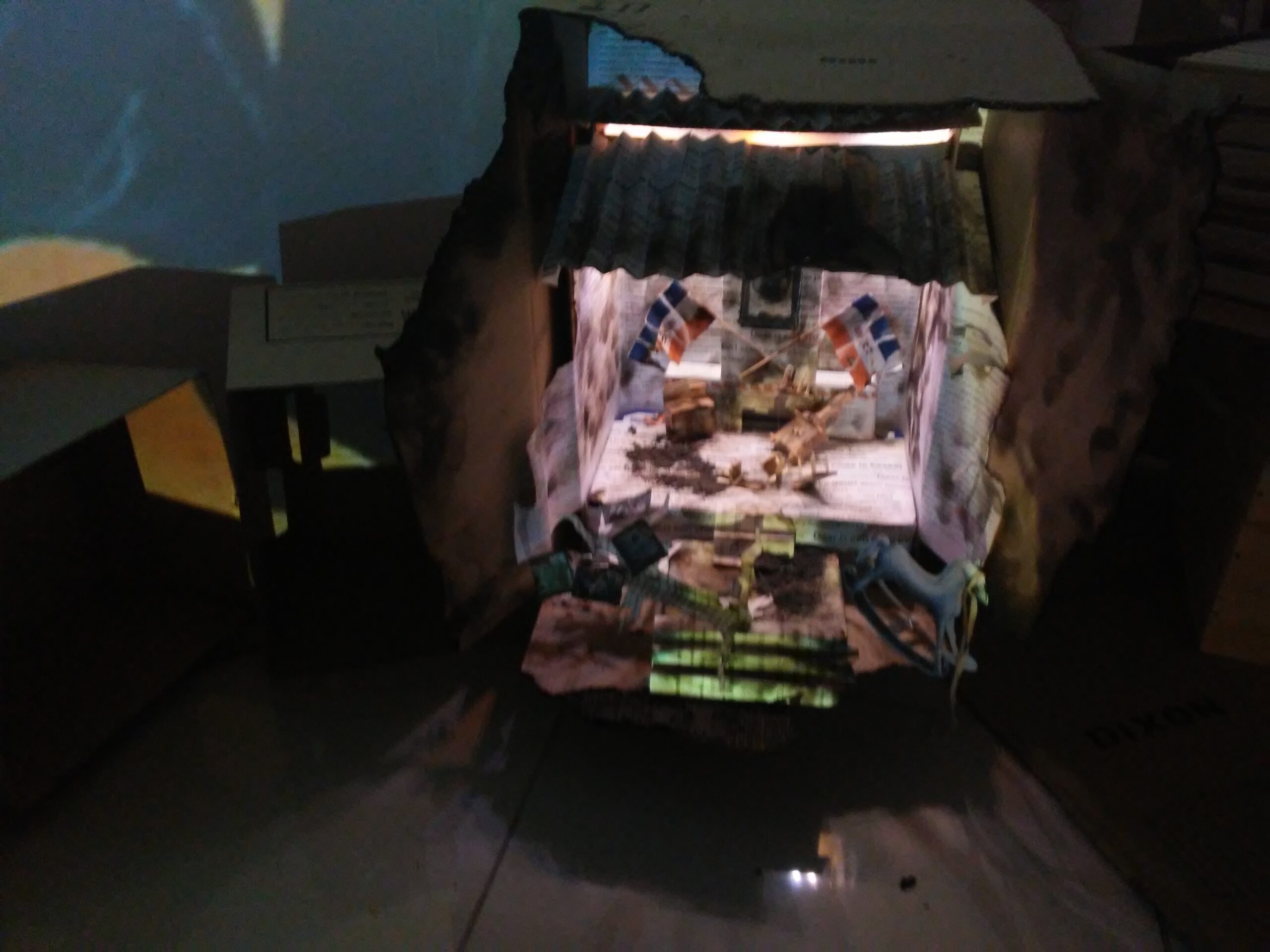
Op my Voorstoep (Photo still)
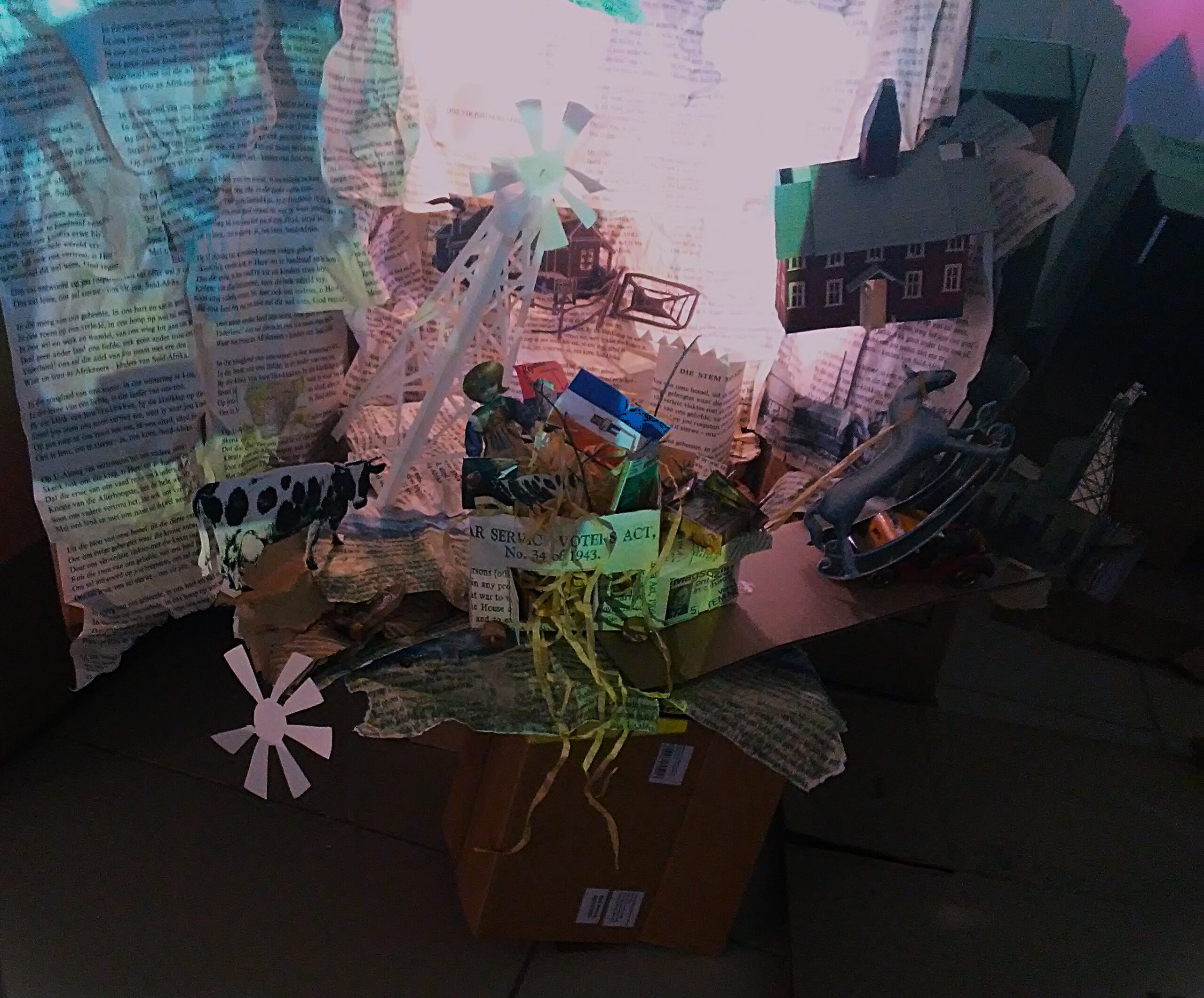
Urbanisation and New Dispensation (Photo still)
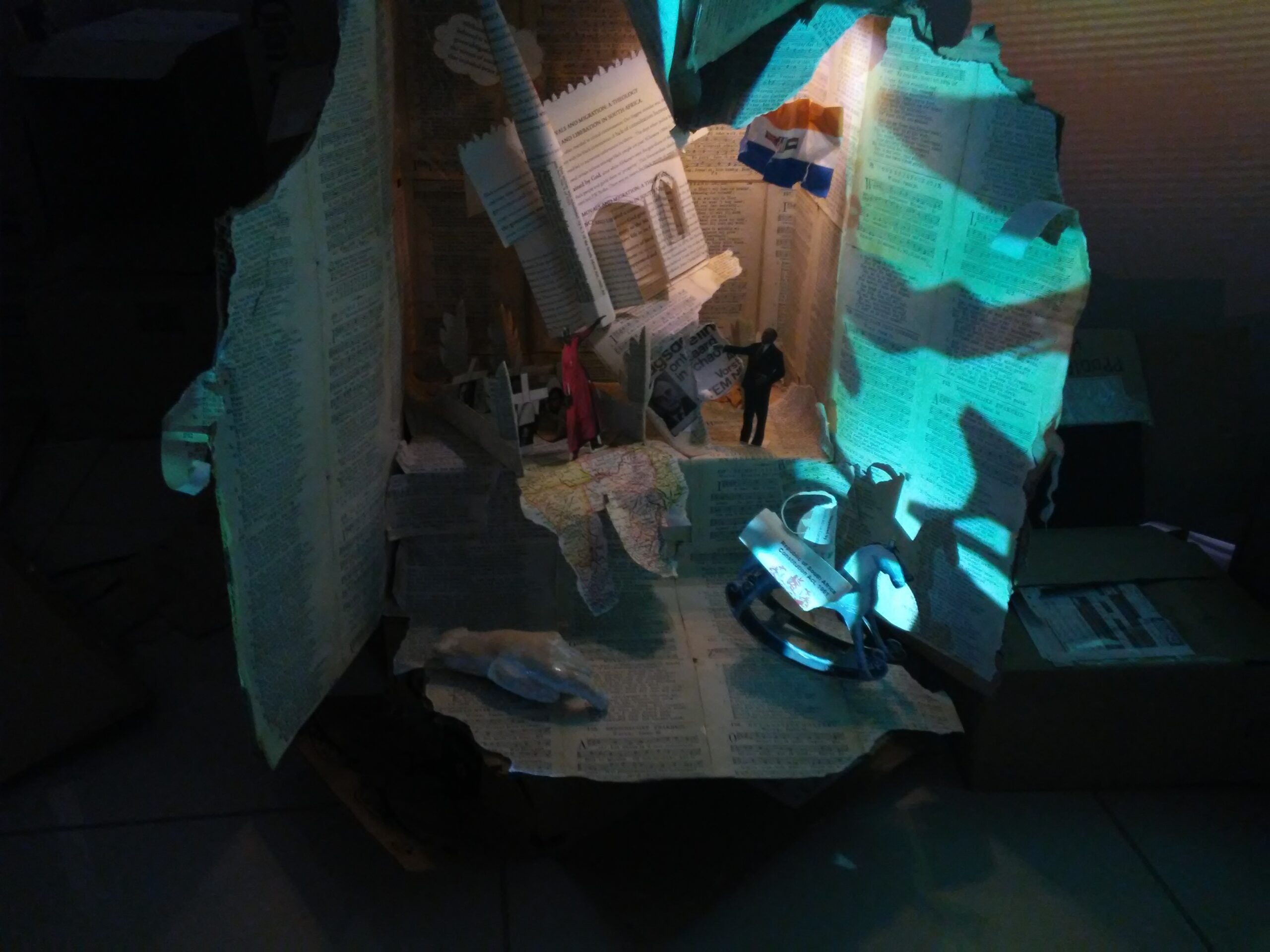
Iota & Title (Photo still)
Please wait for video to open/refresh page:
Wall Projection: Migration: A Small Ethnic Tale
(Wall projection: 3.09)
Exhibition Video Walk: Migration: A Small Ethnic Tale
(Mini theatre video: 1.39)
BIBLIOGAPHY
(1) Ljungqvis FC, Seim A & Collet D.
Famines in Medieval and Early Modern Europe—Connecting Climate and Society, WIRE’s Climate Change, Volume 15, Issue 1 e859; https://doi.org/10.1002/wcc.859, 2023.; https://wires. onlinelibrary.wiley.com/doi/10.1002/wcc.859.